
A projector gives you a big picture, but what it projects onto matters. You can use a wall, a sheet, or a purpose-built screen. This guide explains the types, the specs that matter, and when a screen is worth buying.
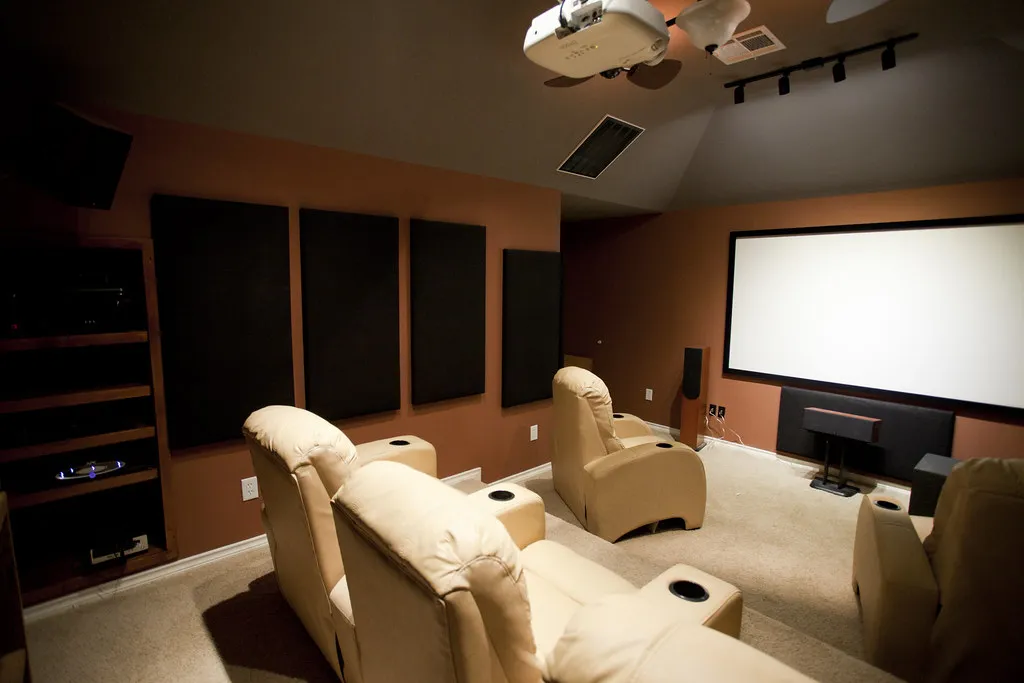
Can you use a wall?
Yes. A smooth, light-colored wall can work for casual viewing. Textured or dark walls reduce quality. Walls can also cause color shifts. If you only watch now and then, a wall is a cheap way to start. Many people upgrade later.
Why use a screen?
A screen is designed to reflect light evenly and maintain color accuracy. It gives a defined edge and can improve contrast in some rooms. Some screens are made to reject ambient light, which helps when you cannot fully darken the room. See projector vs TV for how brightness and room light interact.
Screen types
Fixed-frame screens
A frame holds the screen taut and flat. They look neat, and give the best flatness. They need a permanent spot on a wall, so are best for dedicated rooms.
Manual pull-down screens
Pull-down screens roll up into a case, mounted on a wall or ceiling. They are affordable and flexible, but can ripple.
Motorized screens
A motor lowers and raises the screen, often with a remote. They are more expensive but convenient.
Portable and tripod screens
These fold or stand on legs. They are useful for outdoor movies and for renters. They may be less flat.
Inflatable screens
Big outdoor inflatable screens are popular for backyard movies. They need power for a fan and are bulky.
Size and aspect ratio
Most home content is 16:9. Cinema films are often wider, which shows black bars on a 16:9 screen. Choose the screen size based on viewing distance, room size, and the projector’s throw ratio, which tells you how big the image will be at a given distance. Check the projector maker’s page, for example Yaber’s page for the L2 or L1 Pro.
Gain
Gain measures how much light the screen reflects compared with a reference. A gain of 1.0 is neutral. Higher gain screens look brighter but may narrow the viewing angle and cause hot spots. Lower gain screens look more even but may need a brighter projector. For small rooms, around neutral gain is a safe choice.
Ambient light rejection
Some screens use special surfaces to reflect light from the projector and reject light from other angles. They help in rooms that are not fully dark, but they often need the projector in a specific position. Check the maker’s guidance.
Acoustically transparent
These screens have tiny holes so you can place speakers behind them. It is a high-end feature, not needed for most.
Mounting
Check that your wall or ceiling can handle the weight. Use proper anchors. For tripod screens, use stable ground and weights outdoors.
Cleaning and care
Do not touch the surface. Dust with a soft cloth or compressed air. Follow the maker’s instructions. Store roll-up screens in their cases.
Budget
A basic screen costs far less than a good projector. A modest screen can still be a visible upgrade over a wall. Spend more only if you have a dedicated room.
Quick checklist
- Measure the space.
- Pick the aspect ratio.
- Match size to the projector’s throw.
- Choose a screen type for your room.
- Check gain and viewing angle.
- Consider ambient light.
The takeaway
A wall works to start. A screen makes a visible upgrade, especially in a room that is not fully dark. See our researched top-10 list for projectors with links to official pages. See also how to set up a home theater.